



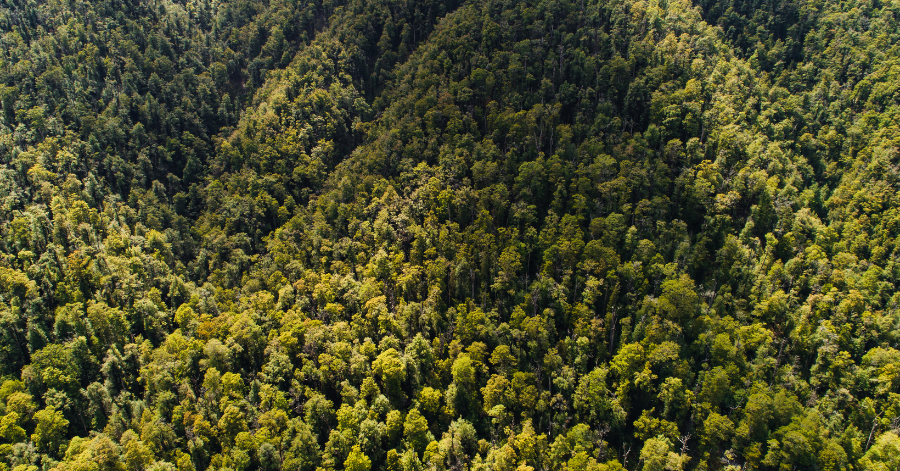
Why do we have a conservation estate in Aotearoa? This is a very current and very political question. It makes for divided views on the current Conservation Amendment Bill and what it means for tourism and conservation in New Zealand.
Transcript
What does it mean to protect something? It is a question that sounds straightforward. In Aotearoa New Zealand, around a third of the country – approximately five million hectares – is managed by Te Papa Atawhai the Department of Conservation as public conservation land. These are the lands we have collectively decided are so ecologically and culturally significant that they should be managed for conservation in perpetuity. The great national parks, fiords, alpine plateaus, ancient beech forests, coastal reserves and wetlands.
They belong, in principle, to all of us. To present and future generations.
Earlier this month the Government introduced the Conservation Amendment Bill to Parliament. The Bill is described as the most significant reform of conservation legislation in forty years ago. Conservation Minister Tama Potaka has spoken of faster decisions, more jobs, less red tape, and stronger protection for nature. The system, the Minister argues, has not kept pace with the demands placed on it.
These are not trivial observations. There are genuine inefficiencies in the current concession system which has been a cause of much frustration among tourism businesses. There are real funding pressures on tracks, huts, and visitor infrastructure. And there is a legitimate argument that the management of public conservation land needs to be periodically reviewed and, where necessary, improved.
But there is a considerable difference between modernising a system and fundamentally changing what that system is for. And the more carefully you read the Conservation Amendment Bill – and reporting on the Bill – the more those differences become apparent.
****
Before we examine the Bill’s specific provisions, it is worth establishing what kind of reform this actually is. The government has framed it as a modernisation – a tidying-up of outdated processes, a removal of unnecessary bureaucracy, and a streamlining of approvals. That framing is worth examining carefully.
Modernisation, as a political concept, often does real work that is not immediately visible. It implies that what is being changed is merely form rather than substance – that the essential purpose of a system is being preserved while its mechanisms are made more efficient. That implication can be potentially misleading.
The Conservation Amendment Bill was developed through a process that began early in the current Government’s term, in November 2024, when it released two discussion documents – one on charging for access to public conservation land, and one on modernising conservation land management. Public consultation followed. In August 2025, the Government announced key policy decisions. On the 7 May the Bill was introduced to Parliament.
What that process does not fully reveal – and what Melanie Nelson, writing in The Spinoff on 19 May, has revealed – is that the Bill contains a fundamental change to the overarching purpose of the Conservation Act itself. A change that was not consulted on, that was not directly announced by the government and that has been “barely noticed”, as Nelson puts it.
We will come to that soon. But first, it is necessary to work through the five key provisions that the government has publicly announced.
****
The first provision is the streamlining of the planning framework. That means the replacement of the current layered system of conservation management strategies, conservation management plans, and national policy statements with a single National Conservation Policy Statement providing what the government calls clear national direction and greater consistency.
The efficiency argument is not without merit. The current planning framework has accumulated over nearly four decades. For businesses seeking to operate on conservation land, navigating overlapping regional plans and policy statements is genuinely complex, slow, and expensive. A single national statement could, in principle, reduce that complexity.
But former Green MP and former Conservation Minister Eugenie Sage, whose experience of conservation law is substantial, has identified the critical problem with this approach. The new National Conservation Policy Statement, while presented as a simplification, effectively removes the decision-making roles of conservation boards and the New Zealand Conservation Authority – the independent statutory bodies through which public and iwi voices have been represented in management planning and decisions on concessions.
These bodies were not created by accident. They were deliberately designed to ensure that the management of public conservation land could not be captured by short-term political interests – that there would be an independent layer of scrutiny between ministerial preference and decisions about places of profound ecological and cultural significance. Removing or marginalising that layer concentrates power with the minister of the day. And concentrated ministerial power over conservation land, as New Zealand’s history demonstrates, is precisely the kind of arrangement that the New Zealand Conservation Authority safeguards against.
****
The second provision concerns concessions. They are the permits that govern commercial and other activities on public conservation land. The Bill proposes to make it faster and easier to get concessions by removing what it calls unnecessary rules, and by introducing exemption and pre-approved activity classes. The government estimates that between 30 and 40 percent of applications will no longer require individual processing.
The genuine case for reform here is real. The current concession system is slow, expensive, and – for genuinely low-impact activities like not-for-profit outdoor education – disproportionate in its demands. Recreation Aotearoa, which represents the outdoor recreation and education sector, has welcomed the exemption of low-impact activities, noting that the current system can take years and cost thousands of dollars in fees that small charities and school programmes are usually unable to meet.
But Eugenie Sage has made a point that cuts to the heart of the commercial concession reforms. The Bill, she argues, does not merely reduce bureaucratic friction for small operators. It actively encourages commercial tourism in national parks and elsewhere by allowing more amenity areas with minimal controls on development, and by removing the current Act’s preference for recreation over tourism in the list of DOC’s functions, and for tourism only that is consistent with conservation values. This is not a neutral efficiency gain. It is a deliberate rebalancing – away from recreation, which is the primary way most New Zealanders use conservation land, and toward commercial tourism, which generates economic returns but whose interests may or may not be totally aligned with conservation.
There are questions that must be asked about any system that reduces scrutiny of commercial activities on conservation land:
- Who determines what counts as low impact – and on what evidence?
- How will pre-approved activity classes be reviewed as ecological conditions change?
- What mechanisms exist to identify and respond to cumulative impacts – the slow aggregation of individually minor activities that collectively degrade an environment over time?
- And what avenues of redress exist when a pre-approved activity turns out to have consequences that were not anticipated?
Individual assessment of concession applications is the point in the system at which someone is formally required to ask: what will this activity do to this place? Reducing how often that question is asked is not, in itself, good for conservation management.
****
The third provision is the one that perhaps demands the most serious attention. The Bill enables greater flexibility to exchange and dispose of conservation land – land that may be deemed surplus to conservation requirements.
Sixty percent of the conservation estate, Melanie Nelson reports, is now eligible for sale or exchange under the proposed reforms. Only 40 percent – areas such as national parks, land critical for threatened species or ecosystems, and habitat that represents one of the best examples of its type – will be off-limits to sale or exchange. The remaining 60 percent is, in the government’s new framing, available.
The word ‘surplus’ carries enormous weight in this provision. It implies that a determination has been made – or can be made – that specific areas of conservation land are no longer ecologically or culturally significant enough to merit public ownership. That is a determination that, under the existing system, requires rigorous independent assessment and transparent processes. Under the new framework, it is a determination that will be made with greatly reduced scrutiny.
Eugenie Sage is blunt about what this means in practice. The Bill treats public conservation land as government land that is available to be developed and disposed of as the Minister and the Department of Conservation choose. That is not a minor reframing. It is a fundamental shift in the conceptual status of the conservation estate. Public conservation land is not government land in the sense that a government office building is government land. It is held in trust — on behalf of all New Zealanders, present and future, and on behalf of the ecosystems that depend on it. The distinction matters enormously, and the Bill appears to blur that distinction significantly.
Conservation land, once disposed of, is unlikely to ever be returned to the conservation estate. The flexibility to exchange and dispose is a one-way door. Before it is opened more widely, we should be absolutely clear about what – and who – we are walking away from.
****
The fourth provision addresses Te Tiriti o Waitangi – the Treaty of Waitangi – and the Bill’s stated aim of providing clarity on Treaty obligations in conservation management.
This is where the language of the Bill becomes particularly careful, and where that care should itself be a signal. Section 4 of the Conservation Act already obliges the Department of Conservation and the Minister to give effect to the principles of the Treaty. The Bill does not remove Section 4. But it does introduce new provisions about how that obligation is to be implemented – provisions that Eugenie Sage others have described as codifying and narrowing the Crown’s Treaty obligations.
The specific concern is this: the new provisions potentially prevent the use of the partnership principle – the principle that the Crown and Māori act as partners under the Treaty – and restrict iwi and hapū to a more limited role of being consulted, rather than participating as rights-holders in decisions about conservation land. That is a significant reduction in the practical meaning of Treaty obligations, even if Section 4 remains formally intact.
Nelson notes that the government’s own analysis briefly acknowledges that the proposed changes will affect Treaty settlements that refer to the purpose of the Conservation Act, and that cultural values more broadly may be diminished due to greater ability to approve economic development on public conservation land. It is extraordinary that a piece of legislation can acknowledge in its own supporting documents that it may undermine Treaty settlement arrangements, and still proceed on the terms currently proposed.
The conservation portfolio carries more Treaty settlement commitments than any other area of New Zealand government. Iwi such as Tūhoe, Ngāti Tūwharetoa, and Ngāi Tahu have spent decades negotiating specific co-governance and co-management arrangements for places in the conservation estate that are of profound ancestral significance. Those arrangements were not symbolic gestures. They were hard-won recognitions of the fact that the conservation estate was built, in part, on the displacement and dispossession of Māori from their lands. Any legislation that makes it harder to honour those arrangements – even in – or perhaps most particularly in – the name of consistency and efficiency – is legislation that deserves the most searching parliamentary scrutiny.
****
The fifth provision — the introduction of international visitor access charges at a small number of highly visited conservation sites – is, of the five, the most defensible. The principle that international visitors should contribute to the cost of maintaining the conservation estate that they use extensively is well established in other countries. The government has suggested that the new charges could raise around $60 million a year, ringfenced for biodiversity, heritage sites, tracks, huts, and visitor infrastructure. New Zealanders will retain free access.
The basic principle of this provision is sound. The New Zealand taxpayer currently subsidises international visitor use of the Conversation Estate because the costs of recreation and tourism, even on the Great Walks, are not fully covered through user fees. But there are still important questions to be asked about how fees will be set.
There are also questions to be asked about how robustly ringfencing of income and re-investment in conservation will be maintained over time. Eugenie Sage might be particularly sceptical about this. Having had a major hand in introduced the International Visitor Levy to be ringfenced for investment in conservation and visitor facilities, the current Government has decided to divert much of the IVL income not into re-investment in tourism and conservation but into tourism marketing (Higham, 2025a).
What is problematic is the way in which this relatively popular and defensible measure has been used to provide cover for the elements of the Bill that are far more controversial. The visitor charges have attracted most of the public and media attention. The changes to the overarching purpose of the Conservation Act have attracted almost none.
****
And so we arrive at the issue that Melanie Nelson, writing in The Spinoff, has identified as the major shift that has been quietly slipped in among the conservation law reforms.
In June 2025, after public consultation had closed, Cabinet directed the Minister of Conservation to amend the purpose statement of the Conservation Act to ensure that the wider reforms to the conservation land management system enable greater economic development on conservation land. This direction was not publicly announced. It was not consulted on. It was revealed only through the release of official documents that accompanied the Bill’s introduction to Parliament.
Until now, the Conservation Act has given priority to conservation values, while also enabling recreational use of public conservation lands to be fostered and tourism allowed when these activities are not inconsistent with conservation. No express recognition was given to economic development. That hierarchy of values was conscious and deliberate. It reflected a judgment, made by Parliament in 1987, about what public conservation land was fundamentally for.
The Conservation Amendment Bill makes three intentionally incisive amendments to that purpose architecture. It makes allowing development a subsidiary function of the Department of Conservation. It empowers statutory planning documents to facilitate economic development. And, most significantly, it amends Section 6 of the Conservation Act to require the Department of Conservation to recognise the economic opportunities that arise from the use and development of land and other natural resources on public conservation land, and to enable this use and development to the greatest extent practicable.
The phrase “to the greatest extent practicable” is not neutral legal language. It places a positive obligation on the department to maximise the extent of economic development on public conservation land, within whatever legal bounds remain. Nelson observes that this wording appears to place greater priority on economic development than on recreation going forward — changing the balance of how the Department of Conservation manages the land it is entrusted with by and for the public.
These changes reduce constraints on economic development and, intentionally, the grounds for legal challenges to that development. The government’s own retrospective supplementary analysis confirms that enabling greater economic development was its primary objective, and that mitigating the risk of legal challenge was a subsidiary one. Sage’s description of this as an open invitation to miners, agribusiness, corporate tourism, irrigation and energy interests to locate their commercial operations and buildings on public land, should set alarm bells ringing.
Nelson suggests that had this proposal to change the Conservation Act’s purpose been fully shared with the public prior to being introduced to Parliament, it would possibly have been challenged in the courts and at the Waitangi Tribunal. By introducing the legislation before the public became aware of this particular change, that path may have been deliberately circumvented.
****
What does all of this mean for tourism?
The government frames the Bill as good news for the tourism industry. Less red tape, faster concession approvals, more amenity areas in national parks, and up to $60 million a year in new revenue reinvested in tracks, huts, and visitor infrastructure. For tourism operators who have long complained about the slow and expensive concession process, there is no doubt genuine relief.
But the tourism implications of this Bill extend well beyond the immediate interests of commercial operators. And those broader implications are, at best, mixed.
The conservation estate is the foundation on which New Zealand’s tourism economy is built. International visitors come to Aotearoa because of the awe-inspiring natural beauty of Fiordland, Tongariro, the Marlborough Sounds and the ancient forests of the West Coast (among other special places). They come because these places are extraordinary – and they are extraordinary, in significant part, because they have been protected. The conservation estate’s value as a tourism resource depends entirely on the ecological integrity and experiential quality that protection has maintained.
A planning framework that places the maximisation of economic development at the heart of DOC’s purpose is not a planning framework designed to manage for conservation in perpetuity. It is a framework designed, explicitly, to enable the extraction of more economic value from the conservation estate. And the extraction of economic value from natural environments and conservation land is a process that, if managed carelessly or subject to insufficient scrutiny, degrades the very qualities that make those environments valuable in the first place.
Commercial tourism in amenity areas with minimal controls on development, pre-approved concessions that reduce individual ecological assessment, disposal of 60 percent of the conservation estate to potential exchange or sale, and a DOC newly obligated to enable economic development to the greatest extent practicable… these are not the conditions under which New Zealand’s conservation management will be strengthened.
The timing of this Act is noteworthy. My recent podcast with Yi Bian explained the shift from extractive to regenerative tourism in Aotearoa. From a regenerative tourism perspective – a model grounded in the principle that tourism should give back more than it takes, and that should strengthen relationships between people and place rather than extract value from them – the Conservation Amendment Bill is a significant step in the wrong direction. Regenerative tourism requires long planning horizons, ecological humility, strong community and iwi voices, and a commitment to the intrinsic value of nature that goes beyond its usefulness to any particular economic interests. The Bill, as currently drafted, moves the governing framework away from each of those requirements.
Eugenie Sage puts it directly: the Minister’s language of modernising the law seeks to disguise the Bill’s dismantling of longstanding safeguards for nature and protected lands. The select committee process – where iwi, environmental groups, local councils, tourism operators, outdoor educators, and the public will all have the opportunity to submit – is the moment at which those longstanding safeguards must be defended.
****
Public conservation land belongs to all New Zealanders. It is held in trust for future generations. It is the foundation of one of Aotearoa’s most important industries. And it is, in the Māori worldview, not merely a resource but a living ancestor – a web of relationships, obligations, and responsibilities that cannot be reduced to an economic opportunity without losing something that cannot be recovered (Higham 2025b).
The Conservation Amendment Bill is before Parliament now. The select committee process is open. Now is the time to make your views known – with the conviction that these precious places deserve. Submissions close on Thursday 2 July.
Conservation Amendment Bill submissions:
References
Department of Conservation Te Papa Atawhai. (2026, 7 May). Landmark Conservation Reform Bill will boost economy and protect nature. https://www.doc.govt.nz/news/media-releases/2026-media-releases/landmark-conservation-reform-bill-will-boost-economy-and-protect-nature/
Department of Conservation Te Papa Atawhai. (2024, 15 November). Proposals to modernise conservation released. https://www.doc.govt.nz/news/media-releases/2024-media-releases/proposals-to-modernise-conservation-released/
Department of Conservation Te Papa Atawhai. (2025, 2 August). Unleashing growth on conservation land. https://www.doc.govt.nz/news/media-releases/2025-media-releases/unleashing-growth-on-conservation-land/
Department of Conservation Te Papa Atawhai. (2024). Exploring charging for access to some public conservation land [Discussion document]. https://www.doc.govt.nz/get-involved/have-your-say/all-consultations/2024-consultations/exploring-charging-for-access-to-some-public-conservation-land/
Department of Conservation Te Papa Atawhai. (2024). Modernising conservation land management [Discussion document]. https://www.doc.govt.nz/get-involved/have-your-say/all-consultations/2024-consultations/help-us-modernise-conservation-land-management/
Higham, J. (2025a). Tourism growth roadmpa supercharged or short sights? (24 June 2026). https://jameshigham.com/tourism-growth-roadmap-supercharged-or-short-sighted/
Higham, J. (2025b). Nature, tourism and colonialism. Checking-In Podcast (14 October 2026). https://jameshigham.com/nature-tourism-and-colonialism/
Higham, J. & Bian, Y. (2026). Regenerative tourism report launched. Checking-In Podcast (5 May 2026). https://jameshigham.com/regenerative-tourism-report-launched/
New Zealand Government. (2026). Conservation Amendment Bill. New Zealand Legislation. https://www.legislation.govt.nz/bill/government/2026/309/en/latest/
New Zealand Parliament. (2026). Conservation Amendment Bill — bill history. https://bills.parliament.nz/v/6/bd7d0f89-d8cb-42f7-9c5f-08deabeda048
Nelson, M. (2026). The quiet but major shift slipped in among the conservation law reforms. The Spinoff. 19 May 2026. https://thespinoff.co.nz/atea/19-05-2026/the-quiet-but-major-shift-slipped-in-among-the-conservation-law-reforms
News Wire NZ. (2026, 9 May). Tama Potaka unveils Conservation Amendment Bill with international visitor charges and faster approvals on five million hectares of DOC land. https://newswire.co.nz/2026/05/tama-potaka-unveils-conservation-amendment-bill-with-international-visitor-charges-and-faster-approvals-on-five-million-hectares-of-doc-land/
Recreation Aotearoa. (2026, 8 May). Recreation Aotearoa welcomes conservation law changes that could make it easier for young people to get outdoors. Scoop. https://www.scoop.co.nz/stories/AK2605/S00179/recreation-aotearoa-welcomes-conservation-law-changes-that-could-make-it-easier-for-young-people-to-get-outdoors.htm
Sage, E. (2026). Conservation Amendment Bill — parliamentary commentary. Eugenie Sage Facebook post.